


introduction
When most investors think about AI, they think about Nvidia. That’s not wrong. Nvidia’s rise to become one of the world’s most valuable companies has been driven by soaring demand for the graphics processors that power everything from ChatGPT to image generators to autonomous driving systems.
But the AI story has become much bigger than a single chipmaker. Running AI at scale requires data centres the size of small cities, electricity on a scale that rivals entire countries, cooling systems that can handle extreme heat, and grid infrastructure capable of delivering power where it’s needed. Each of these is its own investment story, and together they form what’s increasingly being called the AI infrastructure boom.
For investors, this matters because the most obvious AI trade — buying Nvidia — may no longer be the most interesting one. The supporting cast of companies providing power, cooling, construction, and grid equipment are quietly becoming just as important to the AI revolution as the chips themselves.
This article breaks down what’s driving the AI infrastructure boom, who the key players are beyond Nvidia, and what investors should watch as the trade evolves in 2026 and beyond.
What’s Actually Driving the AI Infrastructure Trade
The scale of AI’s physical footprint is genuinely hard to comprehend. When OpenAI or Google trains a new model, it runs tens of thousands of GPUs simultaneously inside data centres that consume as much electricity as small towns. Training is intense but concentrated in bursts. Inference, the process of running the AI to answer queries, uses less power per query but happens continuously across billions of users worldwide, and now accounts for the majority of AI energy consumption over a model’s lifetime.
This has triggered a global buildout unlike anything the technology industry has seen before. Microsoft, Amazon, Google, Meta, et Oracle are collectively committing hundreds of billions of dollars to new data centre capacity. Private equity firms, sovereign wealth funds, and specialist infrastructure investors are pouring in alongside them. The International Energy Agency estimates that data centre electricity demand will surpass 1,000 terawatt-hours by 2030, more than double the 2024 level.
The infrastructure being built to support this demand is enormous. Data centres need land, power connections, fibre optic networks, backup generators, cooling systems, and skilled operators. They also need to be located strategically, close enough to population centres to serve users with low latency, but with access to cheap and reliable electricity. That combination is becoming increasingly hard to find.
The Power Problem: AI Needs Electricity at Unprecedented Scale
The single biggest constraint on the AI buildout is electricity. This is where the retail investor story gets interesting.
Running a modern AI data centre requires roughly 10 times the electricity per square foot of a traditional office building. A single large AI facility can consume more power than 500,000 homes. Ireland’s data centres, already a significant share of the country’s electricity use, are forecast to account for 32% of total demand by the end of 2026. In parts of the United States, including Virginia and Texas, utilities are struggling to keep up with new connection requests.
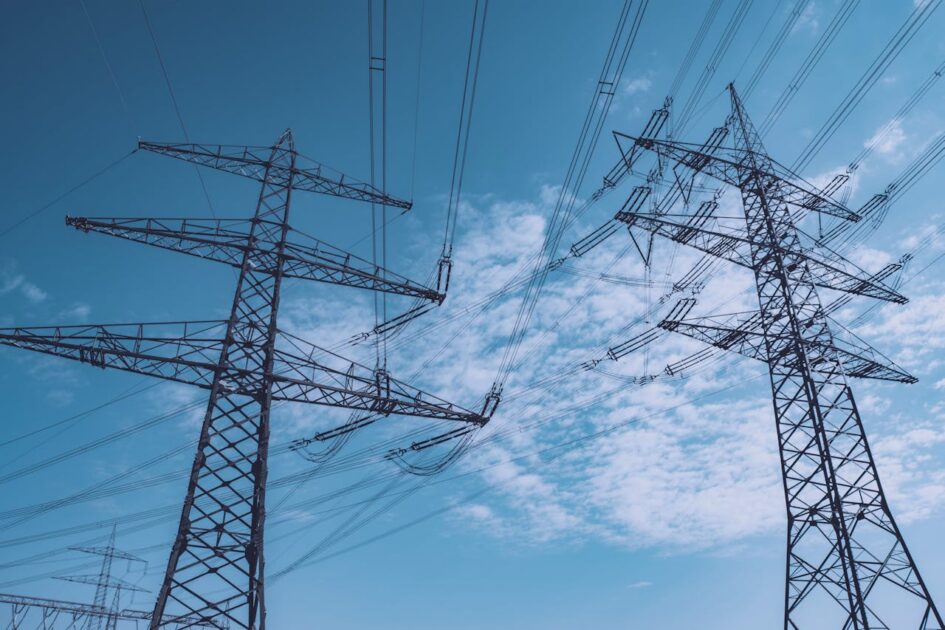
This has created a situation that would have seemed impossible a decade ago. Big Tech companies are now among the largest electricity consumers in the world, and they need more. Utilities that supply them are enjoying a new era of growth after decades of flat demand, and many are being forced to invest in new generation and transmission capacity. Grid equipment makers, from transformers to switchgear, are seeing order backlogs stretch out for years.
For investors, the power angle on AI creates opportunities in utilities, independent power producers, grid equipment manufacturers, and renewable energy developers. Companies like NextEra Energy, Constellation Energy, Vistra, et Eaton Corporation have become core components of the AI infrastructure trade even though they have nothing to do with chips or software.
The Nuclear Revival
Perhaps the most surprising consequence of the AI boom has been the revival of nuclear power. For decades, the nuclear industry in the United States and Europe was stagnant, with plants closing and few new reactors being built. That is changing fast.
Microsoft struck a deal in 2024 to restart Three Mile Island, the site of America’s most famous nuclear accident, specifically to power its AI data centres. Amazon purchased a data centre campus in Pennsylvania for $650 million directly connected to the Susquehanna nuclear plant. Google, Meta, and Oracle have all signed nuclear agreements in various forms, ranging from offtake contracts to direct investments in new small modular reactor (SMR) projects.
The numbers are striking. The pipeline of conditional offtake agreements between data centre operators and SMR projects has grown from 25 gigawatts at the end of 2024 to 45 gigawatts today. Multiple SMR startups are now on a path to construction, and 2026 is being described as the year nuclear power reclaimed relevance, with 15 new reactors expected to come online globally and unprecedented private investment flowing into the sector.
For investors, the nuclear revival has created a wave of opportunities. Uranium producers like Cameco have benefited from rising uranium prices. Established nuclear operators like Constellation Energy have been re-rated sharply higher. SMR developers including NuScale Power et Oklo have seen significant share price appreciation, though these remain higher-risk bets given the execution challenges involved in commercialising new reactor designs.
Beyond Nvidia: The Supporting Cast
If you’re a retail investor looking at the AI trade, it’s worth thinking beyond just the chipmakers. Here are some of the less obvious categories of companies benefiting from the AI infrastructure boom:
Power and utilities. Constellation Energy, Vistra, NextEra Energy, and Duke Energy are all seeing significant demand growth from data centre customers. Some have structured direct long-term power purchase agreements with Big Tech, providing visibility into multi-year revenue streams.
Grid equipment and transformers. Companies like Eaton, Hubbell, et GE Vernova make the essential equipment needed to deliver electricity to data centres. Transformer supply has become a genuine bottleneck in the US, with lead times stretching to two years or more.
Data centre REITs. Real estate investment trusts like Equinix et Digital Realty specialise in owning and operating data centre facilities. They generate rental income from tech tenants and benefit directly from rising demand for computing capacity.
Cooling and thermal management. AI data centres generate enormous amounts of heat, making cooling systems essential. Vertiv Holdings has emerged as a leading supplier of cooling and power management solutions, seeing strong order growth.
Construction and engineering. Quanta Services, MasTec, and similar infrastructure construction companies are building the physical facilities, power connections, and fibre networks that data centres require.
Specialty materials. Le helium shortage triggered by the Strait of Hormuz crisis earlier this year highlighted how essential certain materials are to chip production. Companies involved in rare earths, copper, and specialty gases all play a role in the AI supply chain.
For retail investors, the key insight is that buying an “AI fund” or simply owning Nvidia may not capture the full breadth of the opportunity. Building a more diversified AI infrastructure exposure can spread risk and capture different parts of the value chain.
Risks and Bubbles: Is This 1999 All Over Again?
Every time a transformative technology emerges, comparisons to the dot-com bubble of the late 1990s follow. It’s fair to ask whether the AI infrastructure boom is a similar story.
There are some parallels. Capital is flooding into AI at extraordinary rates, valuations for some AI-exposed companies are stretched, and there’s a risk that the buildout outpaces actual demand. Several AI startups have raised enormous sums at multi-billion-dollar valuations despite generating modest revenue.
But there are also important differences. AI is already generating real revenue, not just hope and promises. Nvidia, Microsoft, and the large hyperscalers are all growing profits, not just losses. The power demand being generated is physical and measurable, not theoretical. And unlike the late 1990s, when much of the infrastructure investment went into under-used fibre networks, AI infrastructure is being absorbed almost as fast as it can be built.
That said, investors should be aware of specific risks:
- Power constraints could slow the buildout. If grid capacity can’t keep up, data centre projects will be delayed or cancelled. This is a real possibility in several regions, including parts of the US and Europe.
- Cooling and water requirements. Some data centre projects are facing pushback from local communities concerned about water usage. This could constrain where new facilities can be built.
- Chip cycle volatility. The AI chip market may be cyclical. If demand moderates, Nvidia and other chipmakers could see significant stock price volatility.
- Regulatory and antitrust risk. Governments are paying closer attention to AI concentration. New regulations or antitrust actions could affect how hyperscalers operate.
- Valuation risk. Some AI-exposed stocks trade at very high multiples. If growth slows, these valuations could compress sharply.
Understanding these risks doesn’t mean avoiding the AI trade entirely. It means sizing positions appropriately and being prepared for volatility. Since the AI trade has broadened so far beyond Nvidia, investors can now easily diversify their portfolios into more areas that are “AI-adjacent”, capturing upside from AI capital inflows while mitigating risk.
What This Means for Your Portfolio
For retail investors looking to participate in the AI infrastructure boom, here are some practical considerations:
Think beyond chips. Nvidia has been the poster child of AI, but the story is much bigger. Power, cooling, grid equipment, and real estate all play essential roles. Diversifying across these categories reduces concentration risk.
Consider ETFs for broad exposure. If picking individual stocks feels too complex, themed ETFs focused on AI, infrastructure, or utilities can provide diversified exposure. Look for funds that include both traditional tech names and the supporting cast of infrastructure companies.
Watch the power angle. Utility stocks have historically been seen as boring, low-growth holdings. The AI boom is changing that. Utilities with strong exposure to data centre demand are experiencing a structural tailwind that could last for years.
Don’t ignore nuclear. The nuclear revival is one of the most interesting side effects of the AI boom. Even a small allocation to uranium miners or nuclear operators can provide meaningful exposure to this theme.
Stay grounded on valuations. Some parts of the AI trade are expensive. Focus on companies with real earnings, strong balance sheets, and visible demand, rather than chasing speculative names on narrative alone.
Keep a long-term perspective. The AI buildout is a multi-year, possibly multi-decade story. Short-term volatility is inevitable. Investors who can maintain perspective through drawdowns are more likely to benefit from the underlying trend.
Staying on Top of the AI Boom
The AI infrastructure story is moving fast. New data centre announcements, power deals, and corporate earnings updates come out almost weekly, and the companies benefiting from the trade span multiple sectors and geographies. For retail investors, staying informed has become both more important and more challenging.
CityFALCON’s AI-powered financial intelligence platform helps investors track the news that matters most to their portfolios. Our system aggregates and scores content from thousands of sources, letting you monitor AI infrastructure developments, nuclear deals, power trends, and individual company news in one place. Access to real-time intelligence via our API makes it easier than ever to stay informed without drowning in noise.
Explore more at cityfalcon.ai.
Laisser un commentaire